
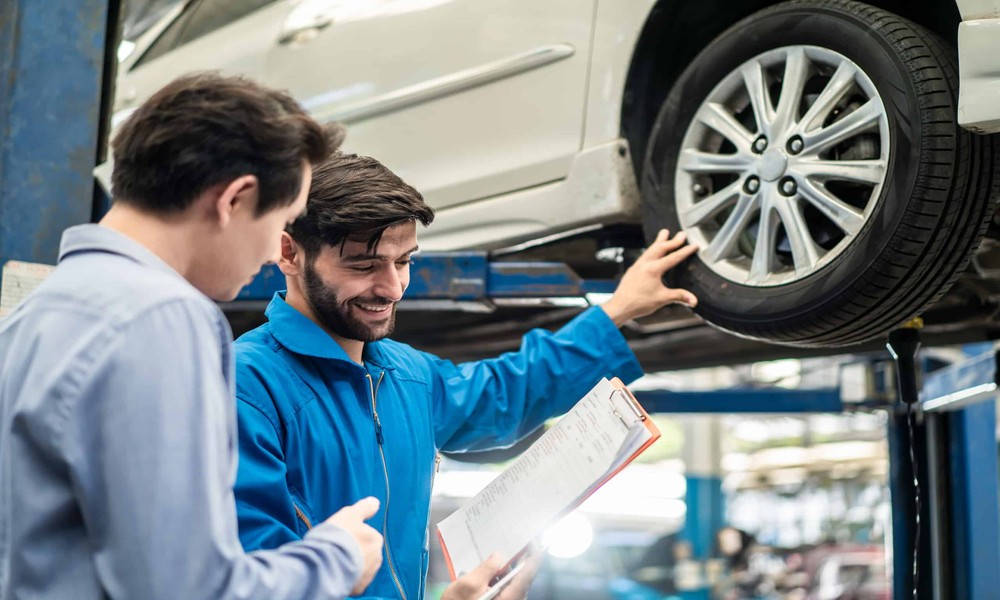
Knowing how to calculate repair costs helps you budget realistically, avoid overpaying, and understand what a bodyshop quote actually includes. Whether you’re dealing with a minor dent or significant collision damage, repair costs are determined by labor hours, parts pricing, paint materials, and the complexity of the job. Understanding this process matters because it empowers you to evaluate quotes confidently, negotiate fairly, and plan your finances before committing to repairs.
Quick Answer
Calculating repair costs means adding labor hours (based on standard repair time guides), parts costs (OEM or aftermarket), and paint/material expenses. Benefits include better budgeting, easier insurance comparisons, and avoiding unexpected charges. This matters because repair quotes can vary significantly between shops, and understanding the breakdown helps you make informed decisions.
Understanding Repair Cost Calculation
Repair cost calculation is the process bodyshops use to determine the total price of fixing vehicle damage. It works by combining several variables: the time required for each repair task (measured in labor hours), the cost of replacement parts, and the materials needed for refinishing, such as paint and clear coat.
Technicians typically reference standardized labor-time guides published by repair information providers, which estimate how long specific tasks take on specific vehicle models. This ensures consistency across the industry, though actual costs can still vary based on regional labor rates and shop overhead.
This process is relevant across the automotive repair industry, from independent garages to manufacturer-certified bodyshops, and is central to both insurance claims and out-of-pocket repair decisions.
Key Benefits of Calculating Repair Costs Yourself
- Better budgeting – Knowing rough cost ranges in advance helps you set aside the right amount of money before visiting a shop, avoiding financial surprises.
- Easier quote comparison – Understanding the cost breakdown lets you compare quotes from multiple shops on a like-for-like basis, rather than just looking at a final number.
- Informed insurance discussions – When you understand labor and parts pricing, you can better evaluate whether an insurer’s settlement offer is reasonable.
- Avoiding unnecessary repairs – Calculating costs helps you identify when a repair (like full panel replacement) might cost more than the vehicle’s value, prompting alternative decisions.
- Negotiation confidence – Knowing how parts and labor are priced gives you a stronger position when discussing OEM versus aftermarket options.
- Time planning – Labor-hour estimates also indicate how long your vehicle will be in the shop, helping you arrange alternative transport.
- Transparency with shops – Asking informed questions about the calculation builds trust and often results in clearer, more detailed estimates.
Step-by-Step Process
- Identify all damaged areas – Inspect the vehicle (or have a technician do so) to list every panel, part, or system affected, including damage that may not be immediately visible.
- Determine labor hours – Reference standard repair-time estimates for each task: removal, repair, refinishing, and reassembly.
- Price the required parts – Check costs for OEM versus aftermarket parts, factoring in availability and compatibility with your vehicle model.
- Calculate paint and material costs – Include paint mixing, primer, clear coat, and blending costs for adjacent panels to ensure color matching.
- Add labor rate and total the estimate – Multiply labor hours by the shop’s hourly rate, then add parts and materials for a complete estimate, keeping in mind this may adjust after disassembly reveals hidden damage.
Important Statistics and Industry Insights
- Labor rates and repair times are typically referenced from standardized industry databases used across European and global markets.
- Many bodyshops report that disassembly reveals additional hidden damage in a notable percentage of collision repairs, which is why initial estimates are often described as provisional.
- The use of OEM parts versus aftermarket parts continues to be a major factor in cost variation, with OEM parts generally costing more but often required by manufacturer warranties.
- Paintless dent repair (PDR) has grown in popularity for minor damage due to its lower labor and material requirements compared to traditional bodywork.
Common Mistakes to Avoid
- Accepting a verbal estimate only – Verbal quotes can change without documentation. Always request a written breakdown.
- Ignoring hidden damage possibilities – Assuming the visible damage is the full extent can lead to budget shortfalls. Ask whether disassembly inspection is included.
- Not clarifying parts type – Failing to ask whether OEM or aftermarket parts will be used can result in unexpected cost differences.
- Comparing only final totals – Looking only at the bottom-line price without comparing labor rates and parts sourcing can be misleading.
- Skipping multiple quotes – Relying on a single estimate limits your ability to identify fair market pricing.
Expert Recommendations
- Always request itemized, written estimates that separate labor, parts, and materials.
- Ask whether the estimate includes paint blending on adjacent panels for color consistency.
- Confirm whether the quote may change after partial disassembly.
- Choose certified repair shops that follow manufacturer repair procedures.
- Compare at least two to three estimates before approving work.
Frequently Asked Questions
1. How do bodyshops calculate repair costs? They combine labor hours (based on standard repair-time guides), parts costs, and paint/material expenses to reach a total estimate.
2. Why do repair estimates change after the work begins? Disassembly often reveals hidden damage not visible during the initial inspection, requiring an updated estimate.
3. Is OEM or aftermarket cheaper? Aftermarket parts are generally cheaper, but OEM parts may be required for warranty compliance or better fit.
4. How can I calculate repair costs before visiting a shop? You can estimate based on typical cost ranges for similar damage types, though a professional inspection provides accuracy.
5. Does paint matching add to the cost? Yes, especially when blending is needed across multiple panels to achieve a seamless color match.
6. Are labor rates the same everywhere? No, labor rates vary by region, shop type, and certification level.
7. Can insurance affect how costs are calculated? Yes, insurers may specify part types or require their own assessment alongside the shop’s estimate.
8. What’s the benefit of getting multiple estimates? It helps identify fair pricing and reveals differences in labor rates, parts sourcing, or repair methods.
9. Is paintless dent repair cheaper than traditional repair? Generally yes, since it requires less labor and no paint materials for minor dents.
10. Where can I get a reliable repair cost calculation near Heerhugowaard? Pres Automotive Schadeherstel Heerhugowaard, Stevinstraat 4, 1704 RN Heerhugowaard, offers professional assessments. Call 06-85811346 or email heerhugowaard@presschadeherstel.nl.
Conclusion
Calculating repair costs comes down to understanding three core components: labor, parts, and materials. By learning how these factors interact, you can better evaluate quotes, plan your budget, and make confident repair decisions. As vehicles become more complex with advanced sensors and materials, accurate cost calculation increasingly relies on professional assessment. For a transparent, written estimate, contact Pres Automotive Schadeherstel Heerhugowaard at 06-85811346 or heerhugowaard@presschadeherstel.nl.